Good blueberries start with the right soil and a patient hand.
A blueberry bush asks for acidic ground, steady moisture and a little patience, and in return it gives fruit for decades. This guide covers wild and cultivated types, how to grow them in a bed or a pot, when to pick, how to keep a harvest, simple ways to cook it and the mistakes that cost the most crops.
Part 01Wild and cultivated: two different berries
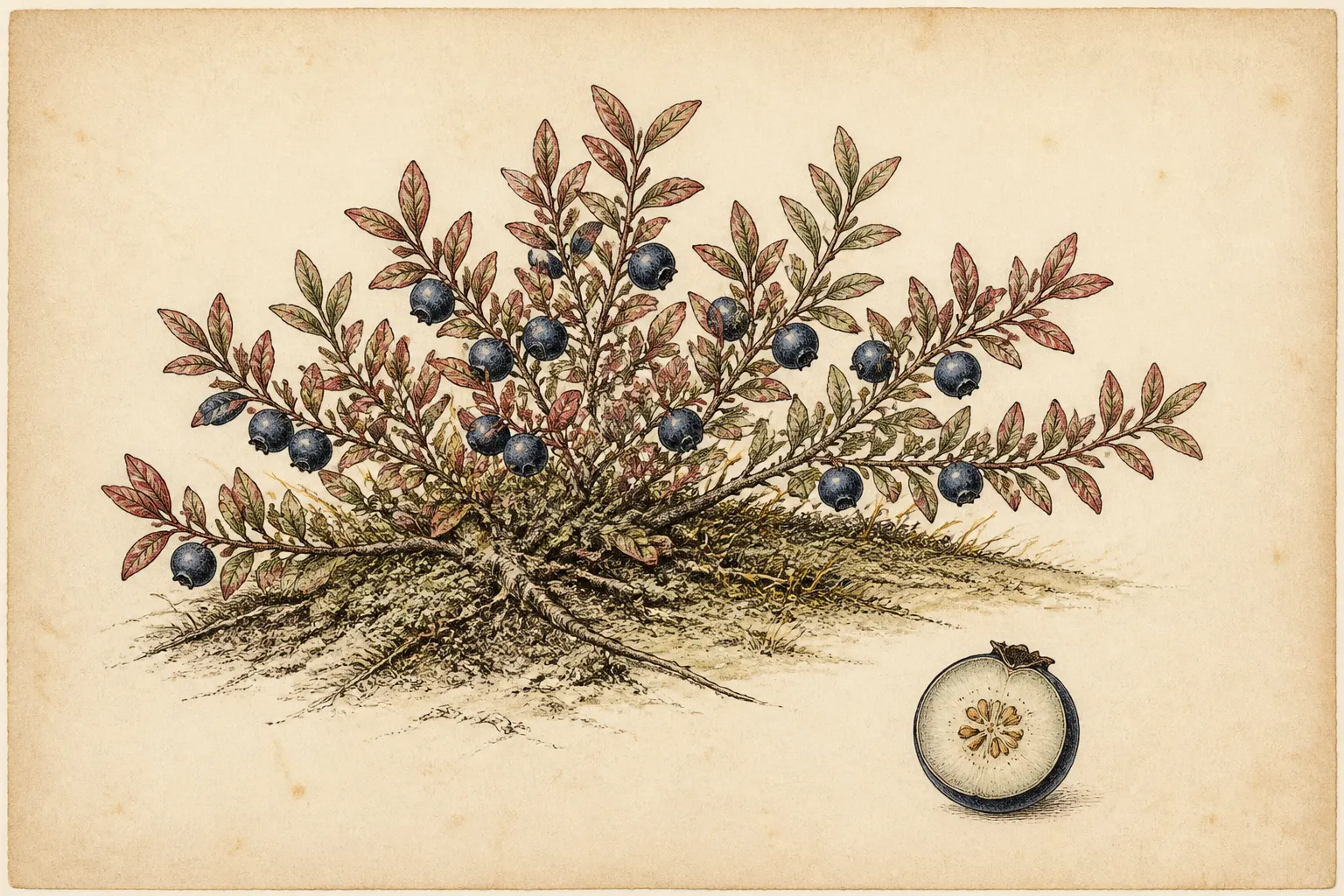
Blueberries are not one plant. The small, intensely flavoured berries sold as wild come from lowbush stands, low spreading patches only a few centimetres to half a metre tall that regrow from underground stems across open ground in cool northern regions. They are managed rather than planted: growers burn or mow a field every second year and let the colony spring back.
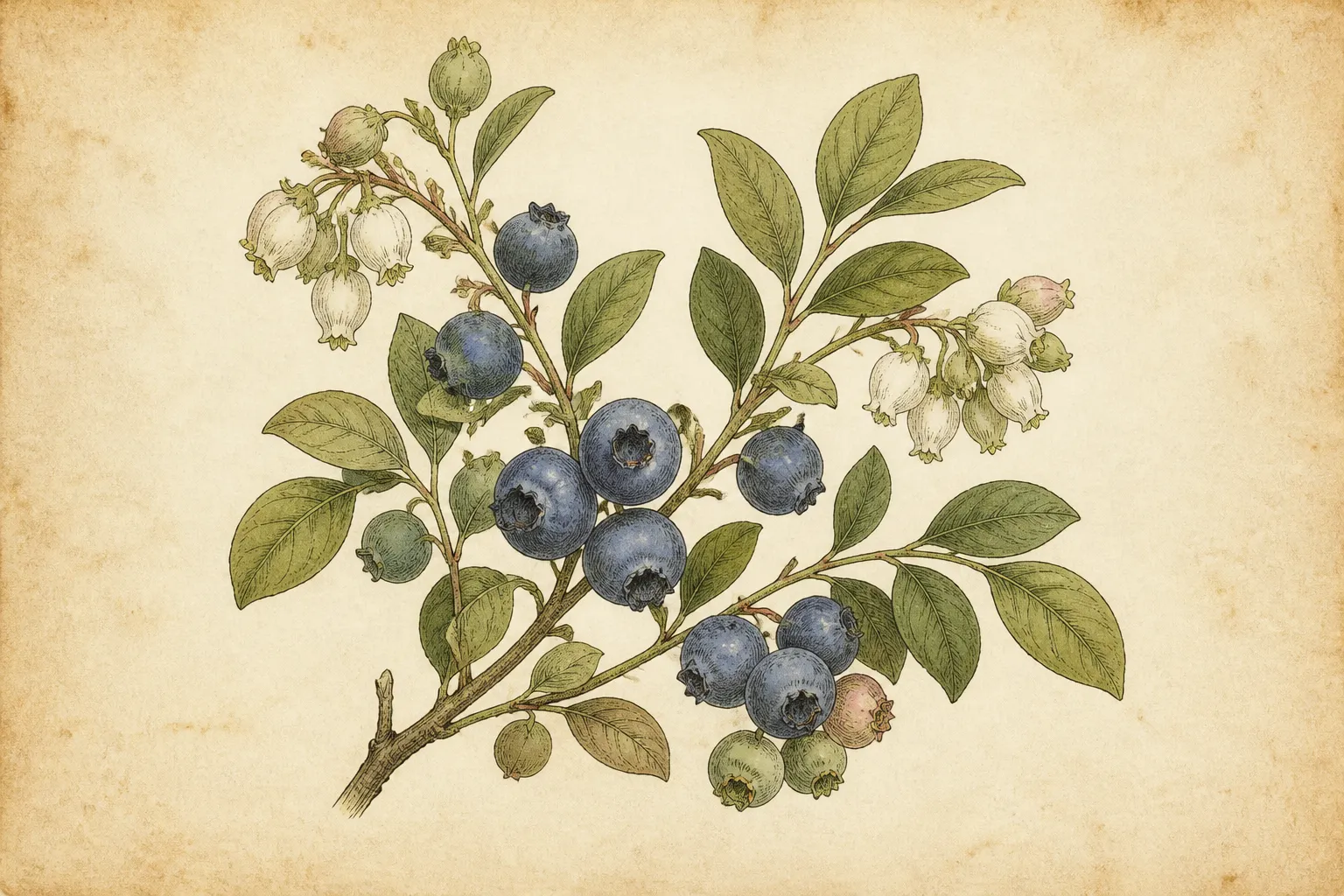
The large, round berries in most gardens come from highbush cultivars, upright shrubs that reach one to two metres. Northern highbush types suit cold winters, southern types suit mild ones, and half-high crosses give hardy, compact plants for snowy prairie and boreal gardens. Rabbiteye types, which tolerate heat and drier summers, grow mostly in warmer climates.
Taste follows the plant. Wild berries are small, so the skin-to-pulp ratio is high, which gives a tarter, more concentrated flavour and a deep colour all the way through. Cultivated berries are juicier and milder, with a sweeter bite that suits eating fresh.
| Type | Height | Berry | Best suited to |
|---|---|---|---|
| Lowbush (wild) | 10 to 50 cm | Small, tart, deeply coloured | Cold, open, acidic ground; baking and jam |
| Northern highbush | 1.5 to 2 m | Large, sweet, juicy | Cold winters, home gardens, fresh eating |
| Half-high | 0.5 to 1 m | Medium, flavourful | Very cold or snowy gardens, containers |
| Rabbiteye | 2 to 4 m | Firm, thick skin | Hot summers and mild winters |
Part 02Growing them in the ground or in a pot
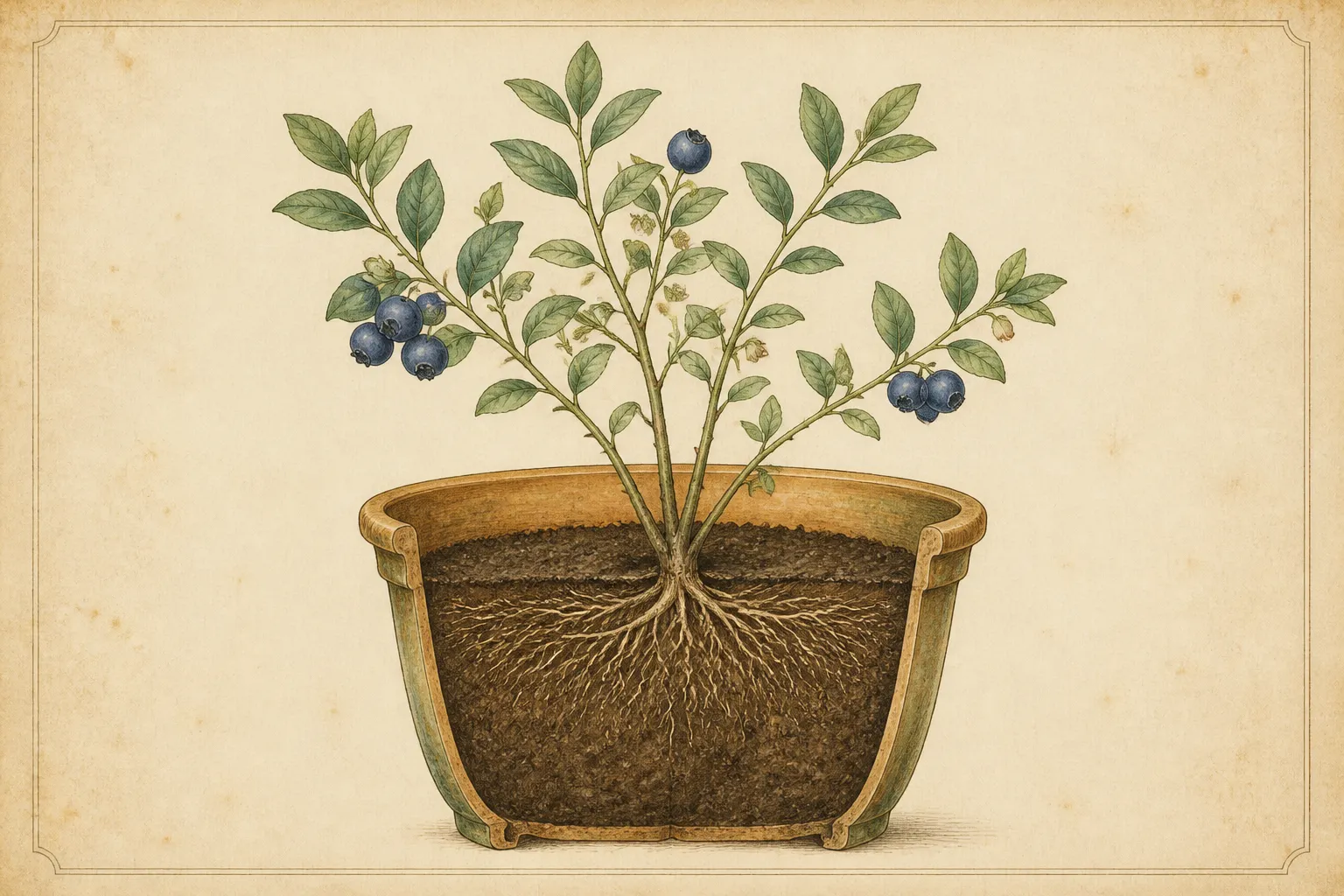
Blueberries are shallow-rooted plants of acidic, humus-rich ground, and nearly every success or failure traces back to that. Without a soil pH near 4.5 to 5.5 the leaves yellow and growth stalls, however carefully the plant is fed.
Soil and planting
Test the soil first. If it is too alkaline, dig in plenty of acidic peat-free organic matter such as composted pine bark or well-rotted conifer needles, or grow in raised beds filled with a suitable mix. Plant at the same depth as in the nursery pot, spread the fine roots, and set bushes about 1.2 metres apart.
Water and mulch
The fibrous roots dry out quickly. Keep the soil evenly moist, never soggy, with a steady soaking each week in dry spells. A 7 to 10 centimetre layer of wood chips or conifer bark holds moisture, keeps roots cool and suppresses weeds. Hard tap water can slowly raise the pH, so rainwater is a kind choice for pots.
Pruning
Leave plants mostly alone for two years apart from removing flowers to build strength. After that, take out the oldest, greyest canes at the base in late winter, along with weak, crossing or low-lying shoots. A bush that holds a mix of young and mature canes crops reliably and bears larger fruit.
In containers
A pot of at least 40 litres holds a full bush. Use an acidic potting mix, ensure good drainage, and set the pot where it gets six hours of sun. Plant two different cultivars nearby, since cross-pollination gives bigger berries and a heavier crop.
Part 03When to pick, and how to tell a ripe berry
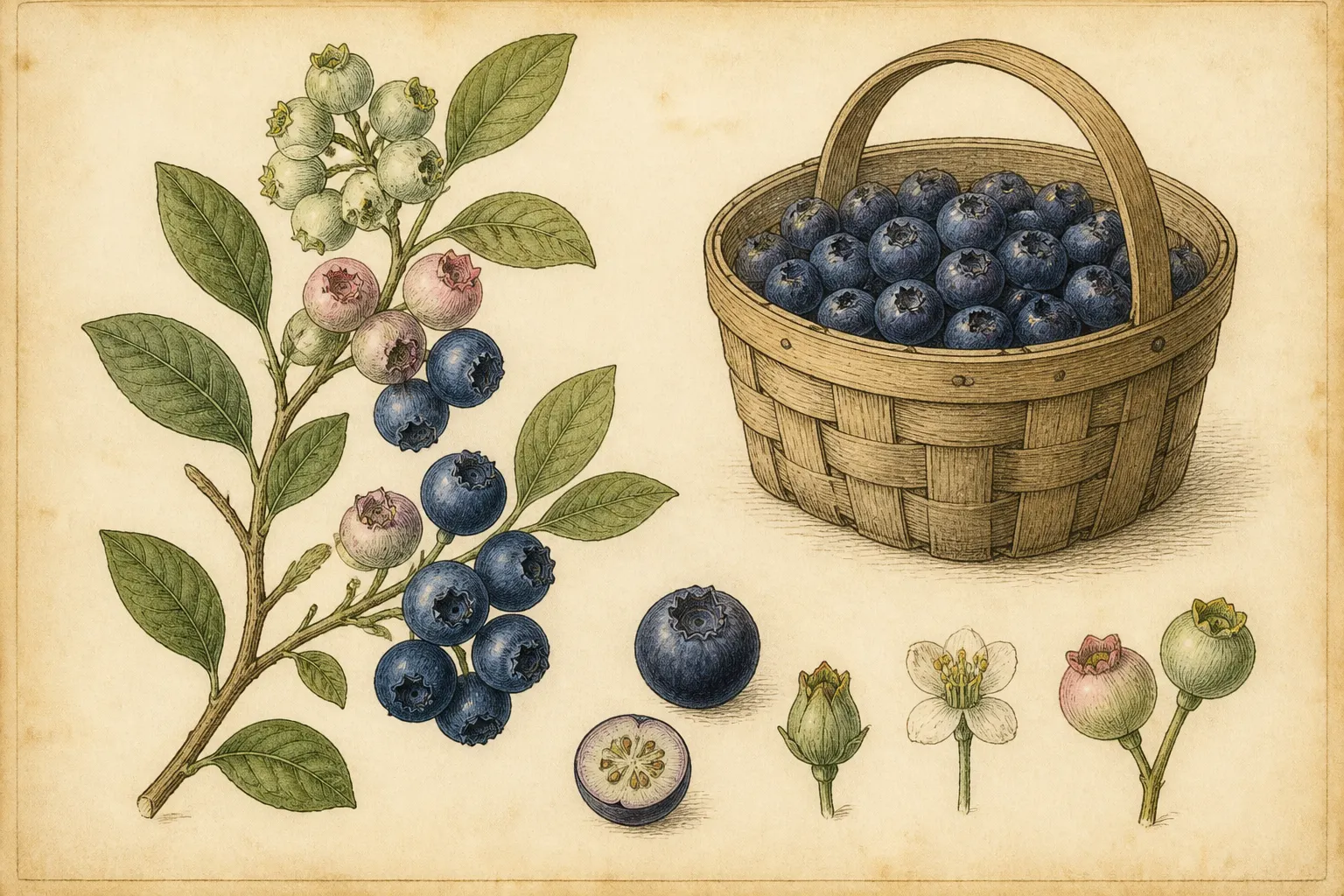
Blueberries change from green to pink to a dusty blue. The trap is that they turn blue a few days before they are truly ripe. A berry that is fully ripe is dark all over, including near the stem, and falls into the palm with the lightest touch.
Berries in one cluster ripen over days, so pick every few days across about three to five weeks rather than all at once. Roll the berries off with your thumb into a shallow container, and leave any that resist. The pale grey bloom on the skin is natural wax; it protects the fruit and is a good sign of careful handling.
Timing depends on region and cultivar. In much of Canada wild lowbush berries are gathered from mid-summer into early autumn, while highbush fruit in home gardens commonly ripens from midsummer through late summer, with early, mid-season and late varieties spreading the harvest.
Taste before you commit. Sample a berry from the middle of a cluster. If it is bland or sharp, give the bush another three or four days.
Part 04Keeping them: fridge, freezer and dryer
Fresh blueberries keep well when handled gently. Store them unwashed and loosely covered in the fridge, ideally in a single layer or a shallow tray lined with paper, and remove any soft or mouldy berries at once so they do not spread. They last about one to two weeks if they were dry and cool when picked.
Freezing
Spread dry, unwashed berries in one layer on a tray, freeze until hard, then pour them into a bag or tub and press out the air. Frozen this way they stay loose, pour freely and keep their flavour for up to a year. Bake from frozen without thawing, and toss them in a spoonful of flour so they do not bleed into the batter.
Drying
The waxy skin slows drying, so many people pierce or briefly blanch the berries first. Dry at a low temperature of about 55 to 65 degrees Celsius in a dehydrator or low oven until leathery and no moisture shows when one is cut. Cool fully, store in airtight jars and use within several months.
| Method | Prep | Keeps for | Good for |
|---|---|---|---|
| Fridge | Unwashed, loosely covered | 1 to 2 weeks | Fresh eating, short-term use |
| Freezer | Tray frozen while dry | Up to 1 year | Baking, smoothies, sauces |
| Dried | Pierced or blanched, low heat | Several months | Trail mixes, cereal, scones |
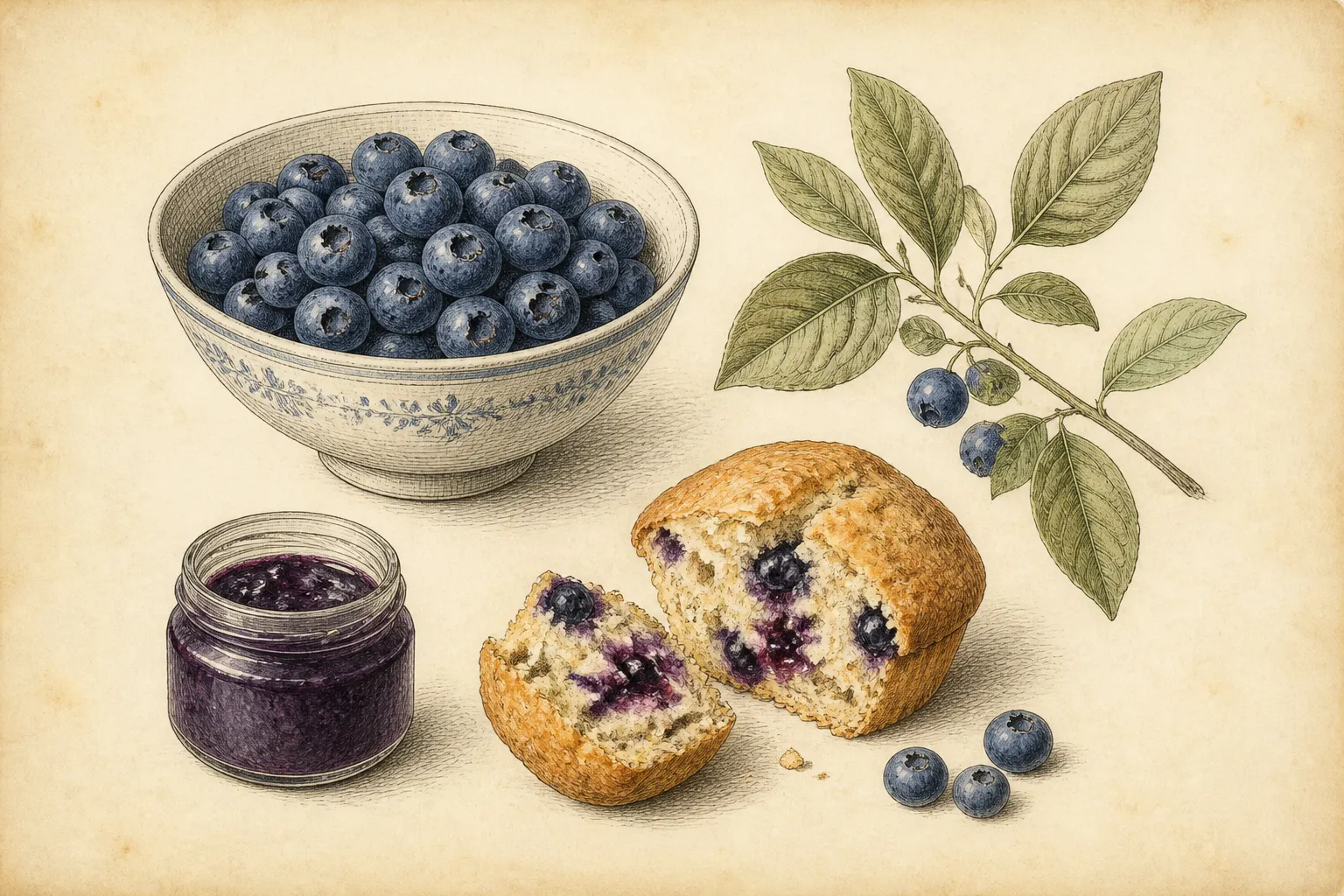
Part 05In the kitchen: muffins, jam, sauce and smoothies
Blueberries are forgiving, and the right treatment depends on what you want from the berry.
Muffins and baking
Use a light hand: stir the batter until just combined, then fold in the berries gently. Lemon zest lifts the flavour, and a coarse sugar topping gives a crisp crown. Frozen berries work well if added straight from the freezer.
Jam and compote
Blueberries are low in pectin and acid, so jam usually needs lemon juice and either added pectin or a longer cook. For a simpler result, simmer berries with a little sugar and lemon for ten minutes into a compote, then keep it in the fridge for a week or freeze it.
Sauce and savoury uses
A quick sauce of berries, a splash of vinegar and a pinch of pepper pairs with roast pork, duck or soft cheese. Cook it just until the skins burst.
Smoothies and breakfast
Frozen berries chill a smoothie without ice, and stirring them into warm oatmeal or yogurt needs no cooking at all.
Part 06What is in a blueberry, plainly
A typical cup of raw blueberries, roughly 150 grams, is mostly water, with around 80 to 85 calories. It supplies natural sugars, a few grams of dietary fibre, and modest amounts of vitamin C, vitamin K and manganese.
The blue-purple colour comes from anthocyanins, plant pigments found in many dark fruit. Researchers study them widely, but nutrition science is still working out what eating them means for any one person. This guide makes no claims about preventing or treating any condition. Blueberries are one pleasant fruit among many, best enjoyed as part of a varied diet.
People on blood-thinning medication, or with specific dietary needs, should follow advice from a registered dietitian or doctor rather than a general guide like this one.
Part 07Common mistakes, and how to avoid them
- Planting in ordinary garden soil. Neutral or alkaline ground causes yellow leaves and weak growth. Test the pH and adjust or use a raised bed.
- Letting the roots dry. Shallow roots dry fast. Mulch and water evenly, especially while fruit swells.
- Growing a single bush. Many plants set more and larger fruit with a second cultivar nearby.
- Picking by colour alone. Berries blue on the outside can still be sour. Wait a few days after the colour change.
- Skipping pruning. Crowded old canes give small fruit. Remove the oldest wood each late winter.
- Washing before storing. Moisture speeds mould and clumps frozen berries. Rinse only before use.
- Feeding with the wrong fertiliser. Use products made for acid-loving plants and avoid strong nitrate sources that burn shallow roots.
- Leaving the crop unprotected. Birds can strip a bush in days; light netting placed before the berries colour keeps most of the harvest.
Last partShort answers to common questions
Do blueberries ripen after they are picked?
No. Unlike peaches or bananas, blueberries do not sweeten once off the plant. Colour can deepen a little, but sugar does not build, so berries should be fully blue and loosening easily before picking.
What soil acidity do blueberries need?
Most prefer a pH between about 4.5 and 5.5. In soil that is neutral or alkaline they develop pale, yellowing leaves because they cannot take up iron, so a soil test is worth doing before planting.
Can I grow blueberries in a pot?
Yes. A large container, at least 40 litres for a mature bush, filled with an acidic mix and watered with rainwater or other low-lime water, can crop well. Compact cultivars are the easiest choice.
Should blueberries be washed before freezing?
It is usually better to freeze them dry and rinse just before use. Moisture on the skin makes them clump and can form ice crystals, while a quick rinse after thawing or just before eating works fine.
Why are my blueberries small and sour?
Common causes are picking too early, a bush crowded with old wood, shade, drought during fruit swelling, or a single plant with no neighbour for cross-pollination.